
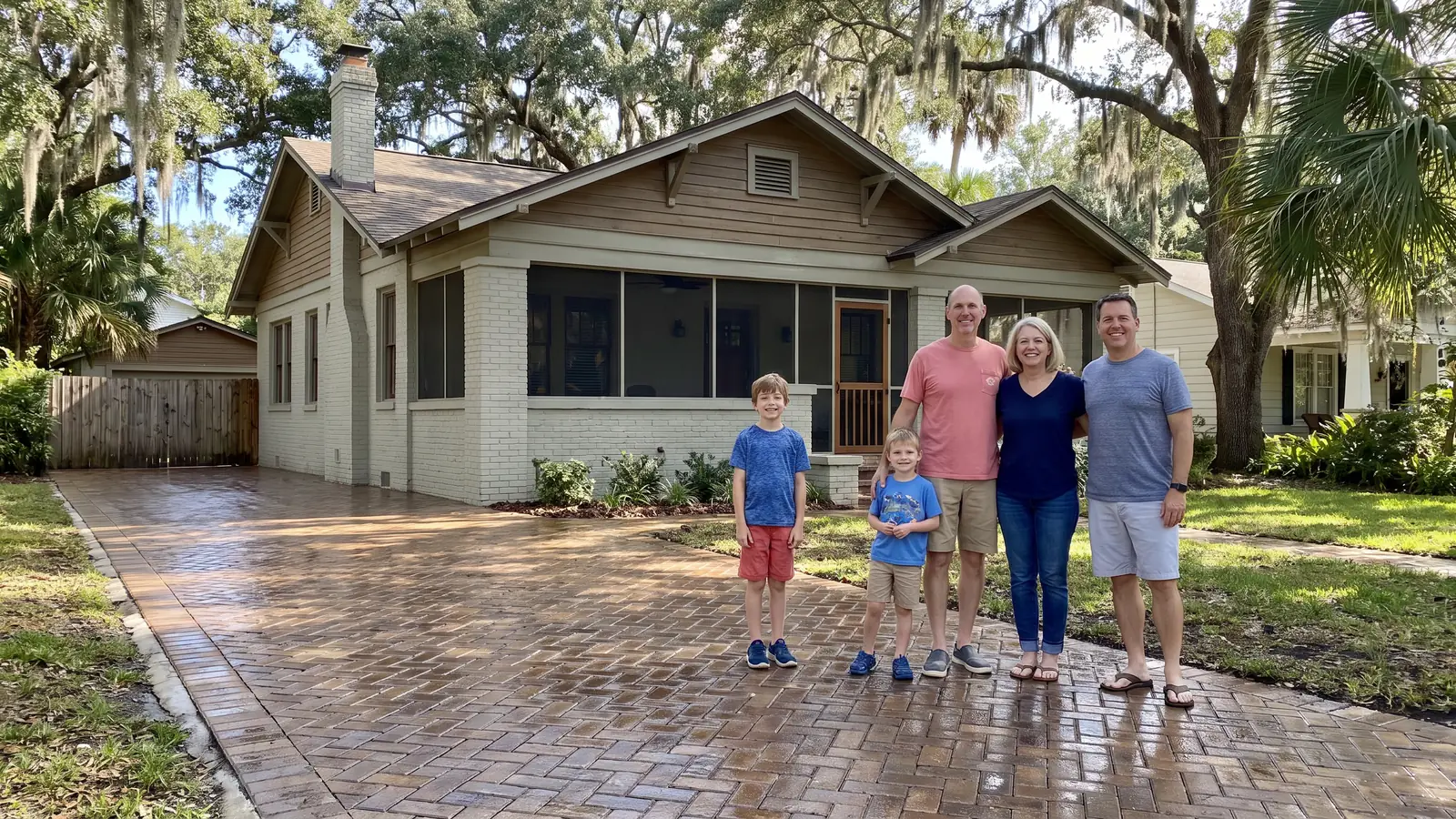
Paver sealing for Highlands homes
Paver Sealing in Highlands, FL
Highlands ranch-house driveways get cleaned, sanded and sealed by a local contractor; call (904) 479-9763 for a free estimate.
- Brings out deeper paver color
- Fresh joint sand helps lock pavers in place
- Gives weeds less room to grow
- Makes the surface easier to keep clean
- Free estimate, no obligation
Request a Free Estimate
Free, no obligation.
Fast, careful paver sealing in Highlands
Paver sealing is available in Highlands, from the ranch-house streets near Ray Greene Park to the blocks off Dunn Avenue. Local contractors clean, re-sand and seal driveways, walkways and patios, with a free estimate. Choose to ask for a free estimate and you can expect to hear back inside 1 business day, usually much sooner.
Maybe the shaded side of your carport slab wears a gray-green film, and the joints have gone soft with weeds. With a wash, fresh sand and a new coat, those pavers go back to a single even color. To go over it first, call (904) 479-9763 and describe what you see to the contractor.
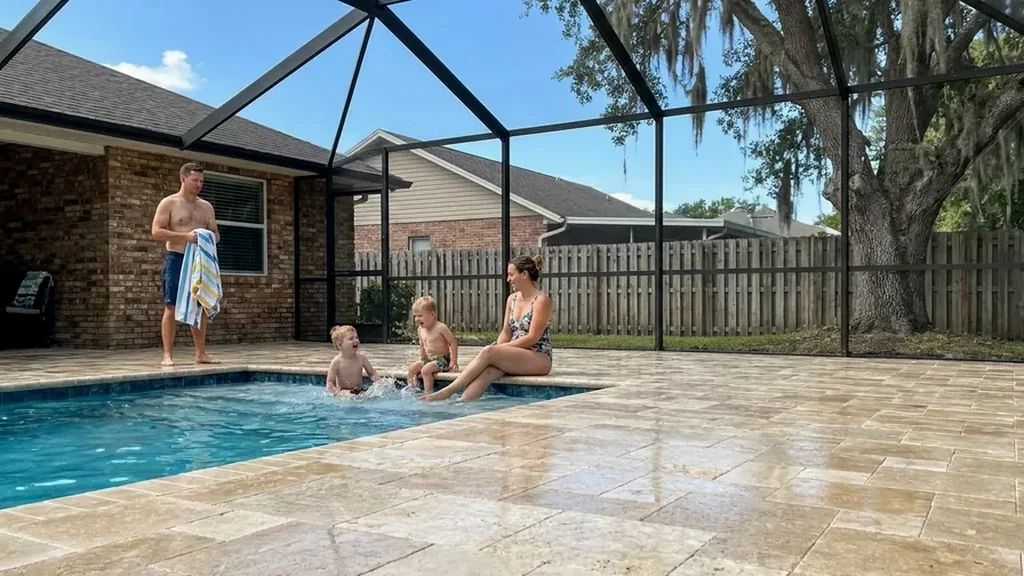
Why hire a local paver sealing contractor in Highlands?
Highlands homeowners tend to pick a local paver contractor because older ranch lots, damp river air and summer downpours each change how a job should go. To hear how that fits your street, ask for a free estimate.
Free look at your driveway
The contractor looks over your Highlands pavers at no charge, and you get a price before anything is agreed.
A published price range
Companies around Northeast Florida publish $1.75 to $3.25 per square foot to clean, sand and seal. Hold any Highlands bid up against it.
A finish that suits a ranch home
Matte sits quietly beside brick and siding. A wet look deepens color but shows scuffs sooner, so weigh it against daily tire traffic.
You stay in charge
You pick the date, the finish and whether to go ahead. A Highlands estimate carries no obligation, and a reply comes within 1 business day.
Get Your Free Estimate in Highlands
Tell us about your pavers in Highlands.
Free, no obligation
What paver problems show up most in Highlands?
Pavers added to a 1950s lot
A real estate page for East Highlands lists single-family homes built from 1946, with a median build year of 1957. A guide to one small Highlands area counts 71 homes built from 1953 to 1970. Pavers on lots like these were almost surely added later, by the owner or a past owner. That means nobody may know what base or sealer is under them. A weak base shows up later as dips and gaps, and a mystery coat can block the product you want. The contractor has to find out before choosing anything.
Damp air near the Trout River
The Trout River, a 20-mile tributary of the St. Johns, runs wholly inside Jacksonville's Northside, and its lower stretch is brackish. Air near water stays humid, and a shaded paver in humid air dries slowly. Algae likes exactly that mix of moisture and shade, which means green film shows up first where the sun rarely reaches. A wash can clear it, and a sealer makes the next wash easier because algae grips a sealed surface less.
Joint sand that summer storms flush out
The USDA describes the Mandarin soil series, first mapped in Duval County, as deep, somewhat poorly drained fine sand. Rain adds up to about 52 inches a year in Jacksonville, mostly from May to September. One Jacksonville paver builder says summer downpours flush sand out of unsealed joints. Once joints open up, weeds and ants move in, and soil washes down where sand used to be. That is why joint sand gets replaced on every job here, not just topped off.
Green film on the north side
A Florida homeowner guide says green algae grows in shaded spots where moisture lingers, such as the north side of buildings and under trees or patio roofs. On a Highlands ranch house, that can mean a back patio or a carport edge. Landscape trade guidance adds that moss and algae should not grow on pavers unless shade is heavy, so green is a sign of how little sun the spot gets.
Color that fades in the summer sun
Summer afternoons in Jacksonville average near 92 degrees in July. Local sun fades unsealed concrete pavers noticeably in three to five years, a Jacksonville builder says. A south-facing driveway in Highlands gets the full dose. Sealer slows that fade. The finish you choose, wet look or matte, decides how the color reads afterward, so it is worth seeing a sample.
Does paver sealing work the same on every Highlands street?
Mostly yes, because older single-family homes make up most of the area, but lot details still change the plan. Wikipedia lists Highlands among the Northside neighborhoods and says the Northside has no consistent boundary. ZIP 32218 alone covers nearly 97 square miles of land. When you ask for a free estimate, give your nearest cross streets so the contractor knows which part of Highlands you mean.
East Highlands has homes built from 1946 on, and streets such as Monaco Drive, De Paul Drive and Pheasant Drive are on its county roll. A smaller area near Tulsa Road and Loyola Drive North counts 71 homes built from 1953 to 1970, with a median living area of about 1,448 square feet. Smaller homes tend to mean smaller driveways, and one Jacksonville cost guide says smaller jobs cost more per square foot. Call (904) 479-9763 and ask how a modest slab is quoted.
About 67 percent of occupied homes in ZIP 32218 are owner-occupied, so roughly a third are rented. If you rent, the owner should be the one to approve work on the pavers. If your street has an association, Florida Statute 720.3035 limits its review of changes to what its declaration or published guidelines say. Mention who owns the home and whether there is an association when you ask for a free estimate.
What does paver sealing cost in Highlands?
Across the region, the commonly published price to clean, sand and seal is $1.75 to $3.25 per square foot. In Highlands, shade growth, missing joint sand and an old failing coat move a lot within that range. A modest ranch-era driveway can cost more per square foot, because prep time does not shrink with the size. For a figure that fits your slab, ask for a free estimate; the estimate is free.
One Jacksonville company notes that strip and reseal costs more when an old coat has failed. Add a back patio or a walkway and the total grows, even at the same rate. Call (904) 479-9763 and the contractor will go over which of these fit your slab, before any work starts.
| Paved area | Typical example | Clean, sand and seal |
|---|---|---|
| 300 sq ft | Small patio or walkway | $525 to $975 |
| 600 sq ft | Two car driveway | $1,050 to $1,950 |
| 1,000 sq ft | Large driveway or pool deck | $1,750 to $3,250 |
| 1,500 sq ft | Driveway plus pool deck | $2,625 to $4,875 |
Math based on the $1.75 to $3.25 per square foot that Northeast Florida paver companies publish. Your contractor sets the actual price after seeing the surface. Repairs, leveling and stripping failed sealer are usually extra.
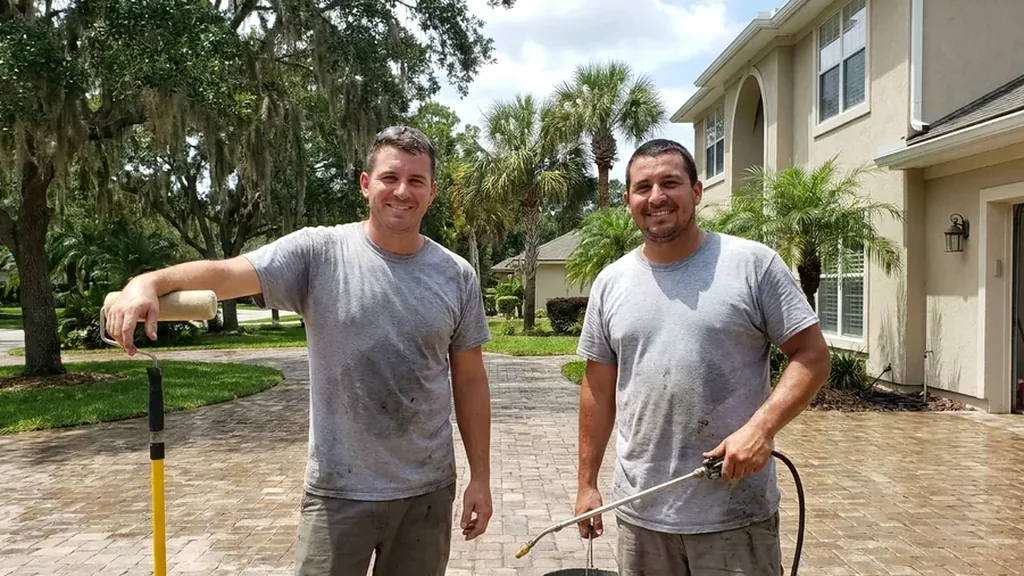
How does a paver sealing job work in Highlands?
Walk the lot and check the old coat
The contractor looks at how your Highlands pavers drain, where shade holds water and whether a coat was ever applied. Sunken or lifted spots are marked for repair first, since sealer preserves any dip it covers. If an old product is there, it matters, because water-based sealer cannot go over solvent-based. Point out the north side of the house, where green tends to start.
Wash off the film and grime
Cleaning removes algae, drip marks and the haze left by damp air. Pressure is kept low and angled so it does not blast the joints open. Rinse water is kept off siding and plantings along the slab. Stains that will not lift are pointed out now, since sealer would trap them.
Put the sand back in the joints
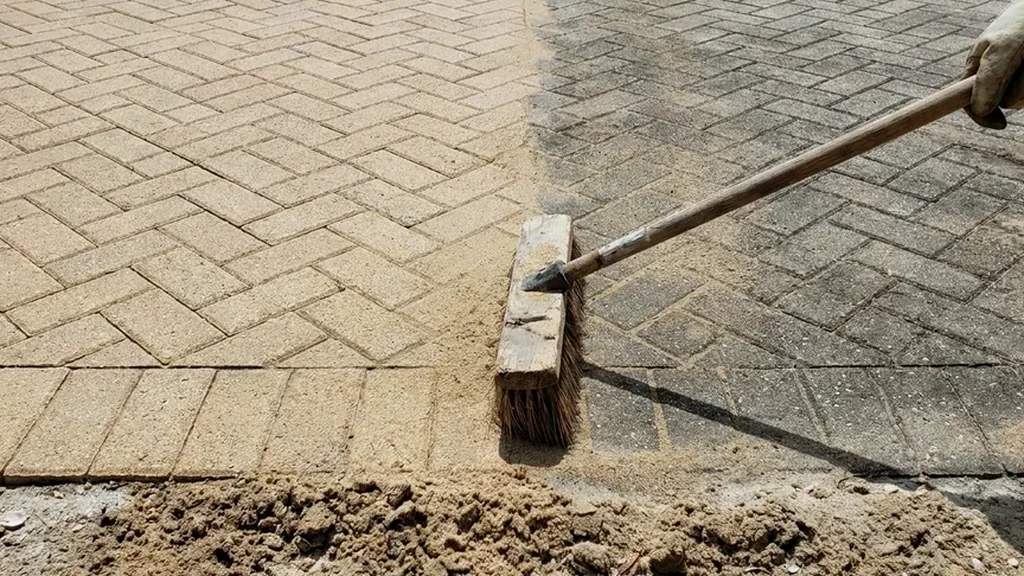
Washing pulls joint sand out, so it gets replaced before any coat goes on. On sandy Duval County ground, empty joints let soil settle in and give weeds a start. Each joint gets filled to the top, and a final sweep clears the loose grains. A matching sand color keeps the surface looking even.
Wait for a dry surface
Sealer needs a dry surface, and one maker asks for 24 hours of dry time after cleaning or rain. Shaded Highlands patios take longer to dry than sunny driveways. A careful contractor reads the forecast, and a damp surface means the job waits. Summer storms can move the date by a day or two.
Apply the finish you picked
Sealer is sprayed on and rolled in for even coverage, in the finish you chose. A wet look shows scuffs sooner than matte, which matters on a carport slab. The coat is commonly quoted to last two to five years, so ask where your shade and tires put you. One local company says foot traffic is fine in 2 to 4 hours and cars need about 24, so ask what applies to your product.
Complete paver services in Highlands
A Highlands job runs in four moves: wash, re-sand, dry and seal. The wash lifts green film and the gray haze that damp river air leaves behind. Fresh sand goes back into the joints, and sealer goes on last so nothing dirty gets locked under it. To ask how long each stage takes on your lot, call (904) 479-9763.
Carport slabs and long driveways take tires and drips. Back patios and porch walkways stay shaded and go green first, while front walks that rarely see sun hold damp the longest. Each surface wears differently, so each gets its own washing time. Tell the contractor which of these you have when you ask for a free estimate.
Sealer is water-based or solvent-based, and then matte or wet look. A past owner may have left an unknown coat, and water-based sealer cannot go over solvent-based. On a 1950s brick ranch, matte often sits more quietly than a high gloss. Call (904) 479-9763 to talk through which finish suits your house.
Rain here falls mostly from May to September, often in short, hard storms. One sealer maker asks for 24 hours of dry time after cleaning or rain before sealing. November through April is the driest stretch, so a firm date is easier to hold in the cooler months. For a date that fits your street, ask for a free estimate.
Questions to ask before you hire
- My driveway is shared with a neighbor. How do you handle the property line?
- Can you keep the sealer away from the stone around my fire pit?
- Can I still get my car out in the morning on the day of the job?
- What would make you suggest a low-sheen finish for my patio?
- My driveway slopes toward the street. Does that change how the sealer goes on?
- If you miss a spot, is the touch-up visit free?
- Can you tell whether my pavers are concrete, brick or travertine before you quote?
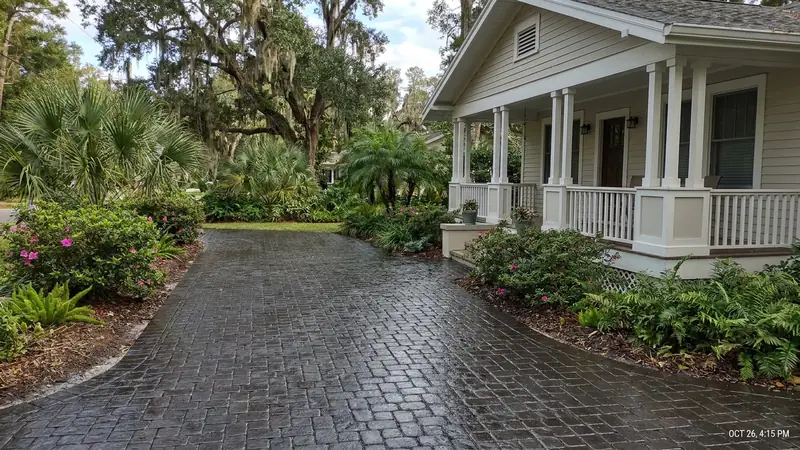
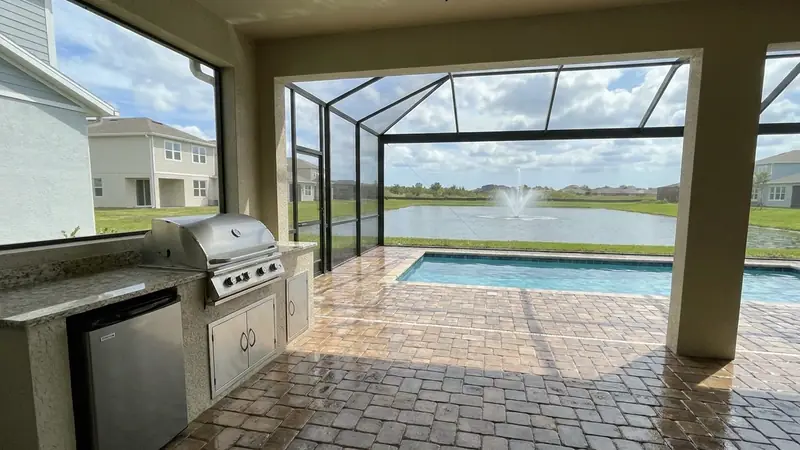
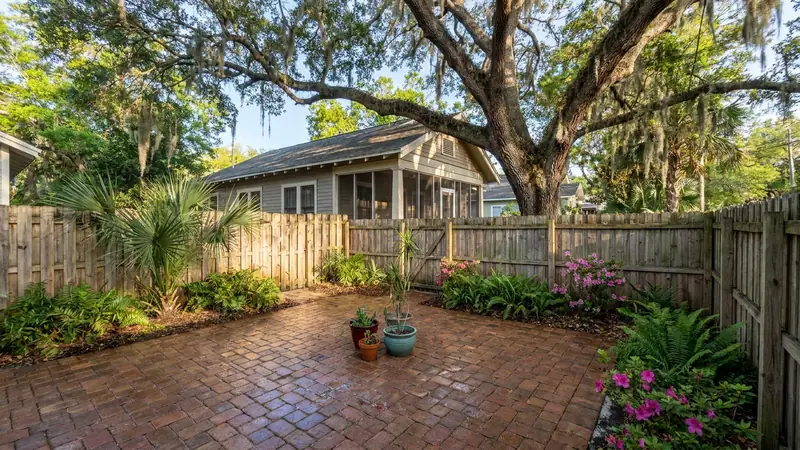
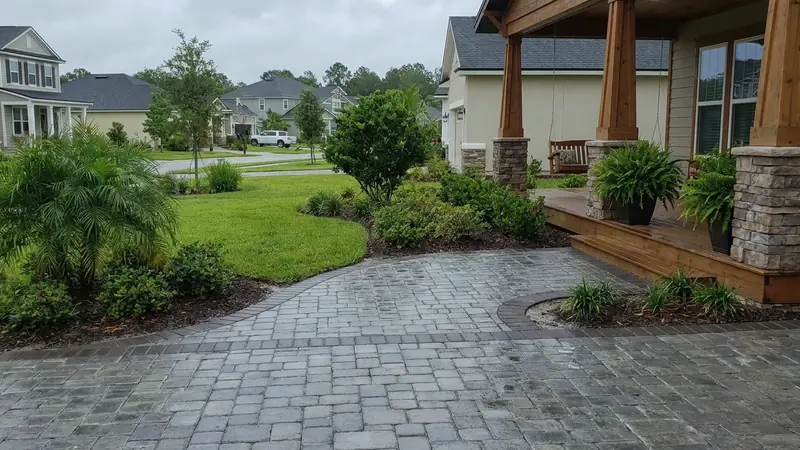
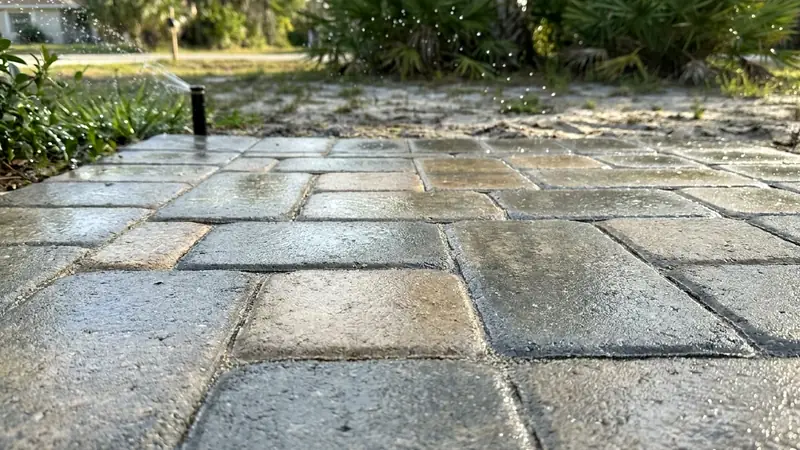
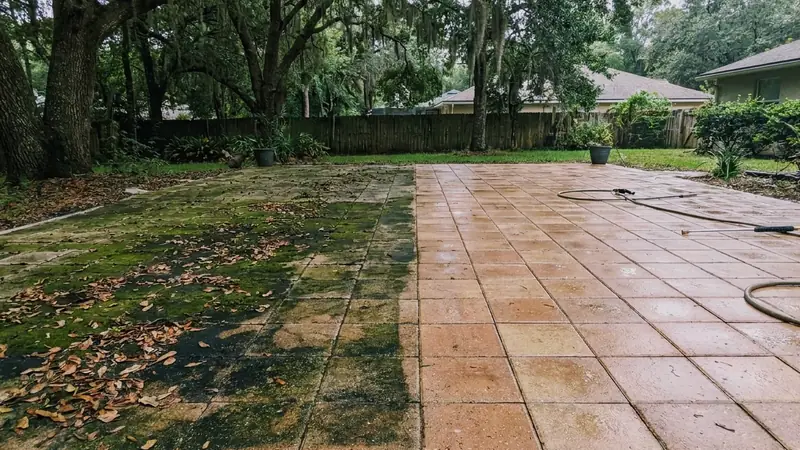
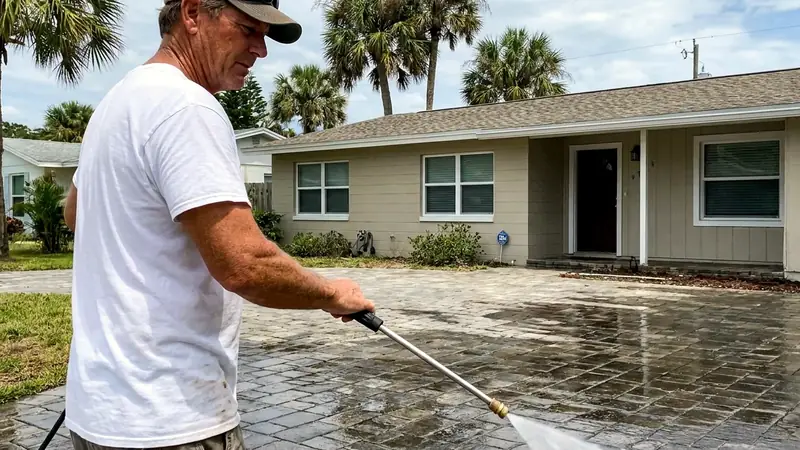
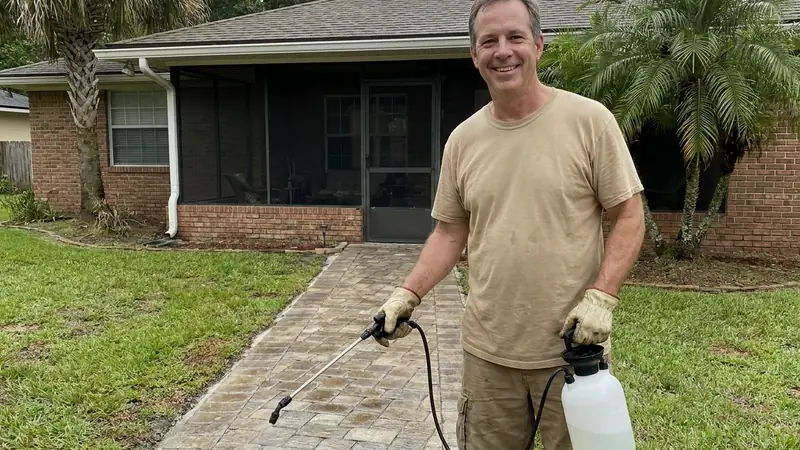
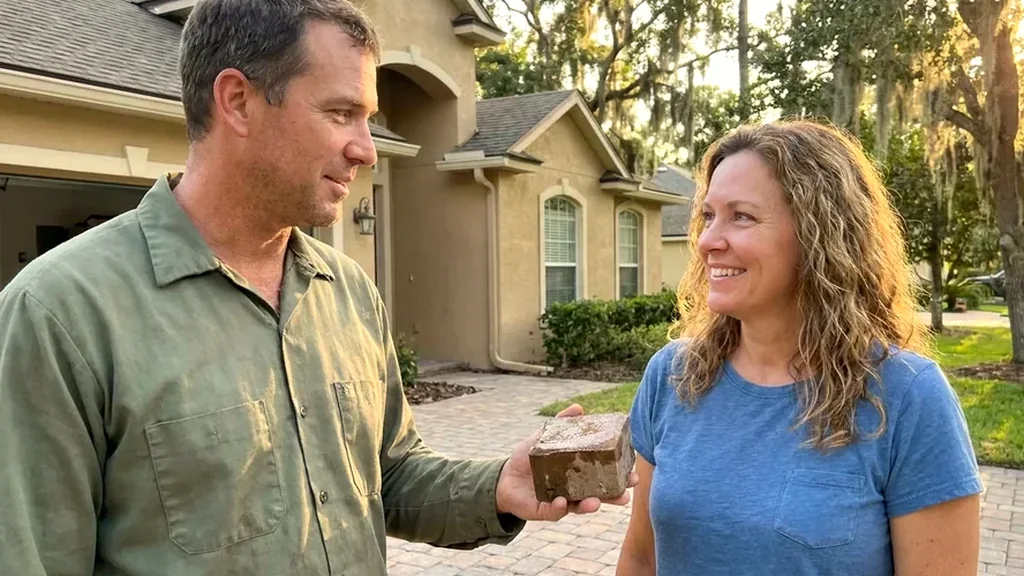
What do sealed pavers look like around Highlands?
Why local matters in Highlands
A contractor who knows Highlands will ask how old your pavers are and who laid them, since many lots here date to the 1950s and 1960s. That history decides how much repair and cleaning comes before any sealer. Someone from across town may never think to ask. To speak with a contractor who covers north Jacksonville, call (904) 479-9763.
Local knowledge covers the air too. The Trout River is brackish in its lower stretch, and the damp that comes with a river keeps shaded corners green. A contractor used to that will check the north side of the house first. You can ask for a free estimate and ask how the contractor plans for it, with no obligation to hire anyone.
Distance matters in a ZIP this big, and Highlands covers a lot of ground. ZIP 32218 runs from the streets off Dunn Avenue to the zoo at the mouth of the Trout River, so travel time and scheduling vary by address. A local contractor can often say up front which day fits your street. Call (904) 479-9763 to ask.
Where is Highlands, and what landmarks help me describe my street?
Highlands is one of the Northside neighborhoods of Jacksonville, listed beside Brentwood, Dinsmore, Garden City and Oceanway. Wikipedia says the Northside has no consistent boundary and joined the city in the 1968 consolidation. Ray Greene Park, off Leonid Road, opened in 1957 and grew by 30 acres in the late 1970s. If your street is near the park, ask for a free estimate and say so.
Highlands Regional Library sits at 1826 Dunn Avenue, and the North Campus of Florida State College at Jacksonville, established in 1970, is off Dunn Avenue near I-295. Jacksonville Zoo and Gardens covers 122 acres where the Trout River meets the St. Johns, and Lem Turner Road crosses the river on the C. Ray Greene Bridge. If you are near any of these landmarks, call (904) 479-9763 and give your street.
Frequently Asked Questions
How much does paver sealing cost per square foot in Highlands?
Budget $1.75 to $3.25 per square foot for cleaning, sanding and sealing, a range Northeast Florida companies commonly publish. Where a Highlands job lands depends on shade growth, lost joint sand and any old coat. Ask for the total area in writing so you can compare it with that range.
Is it good to seal pavers in Florida, and in Highlands?
Yes, because sun, rain and humidity all wear on unsealed pavers. According to a Jacksonville builder, unsealed concrete pavers visibly fade in three to five years of local sun. Sealing also holds joint sand in place, which keeps weeds and ants out of the joints. It makes the next cleaning easier too, since dirt and algae grip a sealed surface less.
Is it better to spray or roll paver sealer?
Most pros do both. A manufacturer bulletin recommends spray and back roll for most sealers, since the spray sets the amount and the roller works it into the surface. Ask the contractor which product and method will go on your Highlands pavers.
What makes paver sealing cost as much as it does?
Most of the money goes to prep, and the sealer itself is a smaller line. A Jacksonville company says each hour of sealing comes with about 2 to 3 hours of prep. Washing, re-sanding and waiting for a dry surface all add labor, and small jobs cost more per square foot.
How long does sealer last on pavers in Highlands?
Plan for two to five years before the next coat, the span companies commonly quote. Heavy shade and daily tires are good reasons to plan for the shorter end. A coat is worn when water soaks in and darkens the paver instead of beading.
How soon can I drive on my Highlands driveway after sealing?
Foot traffic is usually fine within a few hours, and cars wait about a day, though a shaded slab may need longer. One Jacksonville company says sealer needs 2 to 4 hours before walking and 24 hours before vehicles. Your product and the weather can change that, so ask on the day.
Can new sealer go over what is already on my pavers?
Not always, because a water-based sealer cannot be applied over a solvent-based one. Someone has to work out what the old product is before a new one is chosen. On a 1950s lot where pavers were added years later, you may not know who sealed them. Hang on to any receipt or product name you come across.
Will sealing my Highlands pavers stop weeds in the joints?
It cuts them back a lot, though no coat is a promise. Weeds start where joints have lost sand and soil has settled in. Sealer locks fresh sand in place, so there is less open space for seeds to take hold. Pull any large weeds before the wash so roots do not push the sand out again.
Can pavers be cleaned, sanded and sealed in one visit?
Sometimes, but it depends on drying time. One Jacksonville company says its process takes two days to clean and seal, with about 24 hours for the sealant to dry. A shaded Highlands patio can take longer, so expect the contractor to plan for a second day.
Do I need HOA approval to seal pavers in Highlands?
Only if your street has an association. Florida Statute 720.3035 limits an association's review of changes to what its declaration or published guidelines say. Check yours before you pick a finish, since a wet look is more likely to need a sign-off than a natural one.
Nearby areas we serve
Ready for a Free Estimate in Highlands?
Call (904) 479-9763 and tell us about your pavers.
Free, no obligation