
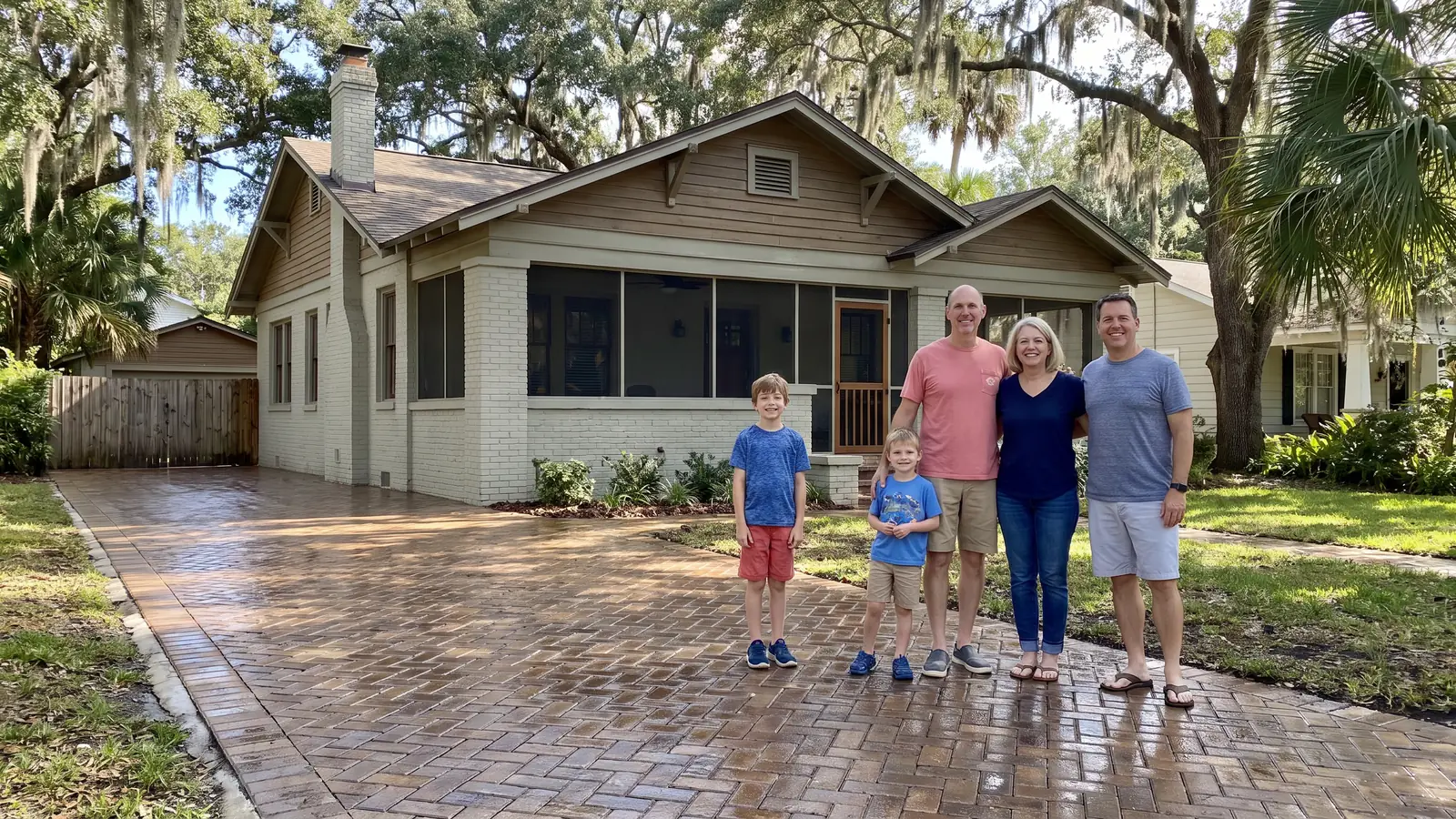
Paver sealing for Fort Caroline homes
Paver Sealing in Fort Caroline, FL
Pavers on Fort Caroline's old dune ridges can be washed, re-sanded and sealed; call (904) 479-9763 to ask a local contractor.
- Brings out deeper paver color
- Fresh joint sand helps lock pavers in place
- Gives weeds less room to grow
- Makes the surface easier to keep clean
- Free estimate, no obligation
Request a Free Estimate
Free, no obligation.
Fast, careful paver sealing in Fort Caroline
Paver sealing is available across Fort Caroline, from the stretch along Fort Caroline Road to the gated streets near the Intracoastal. Local contractors handle washing, fresh joint sand and sealing on driveways, pool decks and walkways, and the estimate is free. A request sent when you ask for a free estimate gets a reply within 1 business day, usually much sooner.
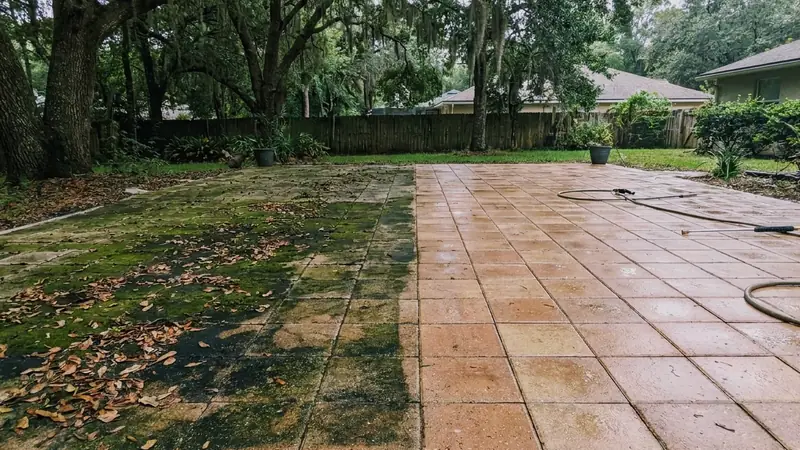
Picture a long driveway with tire tracks gone green, leaf stains from the oaks and joints that have thinned out. After a wash, new sand and a fresh coat, those pavers go back to one clean tone. If you would rather talk first, call (904) 479-9763 and describe the slab.
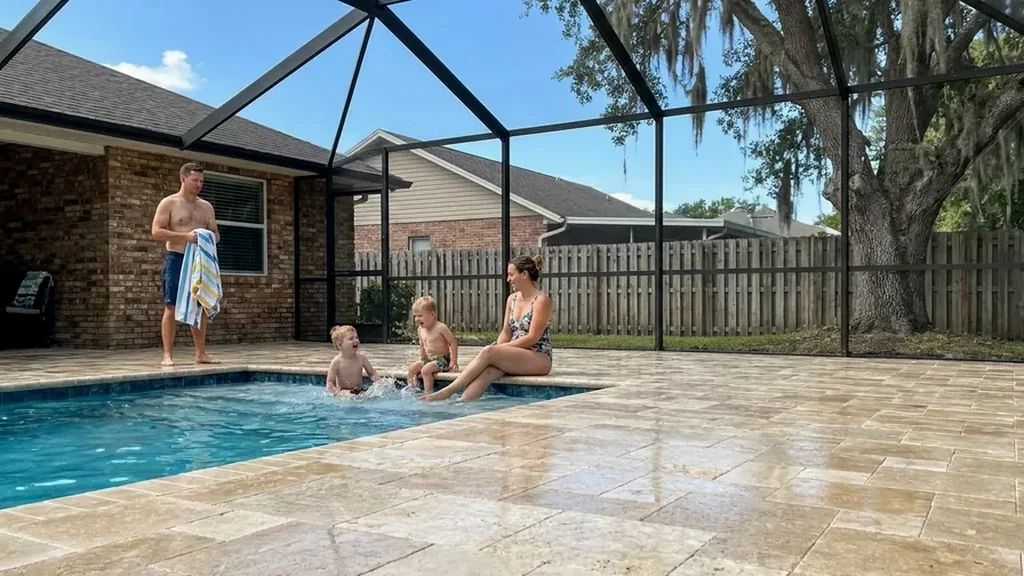
Why hire a local paver sealing contractor in Fort Caroline?
Fort Caroline homeowners tend to choose a local paver contractor because sloped ground, big lots and gated streets each change how a job is run. To hear how that fits your address, ask for a free estimate.
Estimate first, decide later
A local contractor looks at your Fort Caroline pavers at no charge. You see a price before you agree to anything.
A price range you can check
Large drives are measured in full, so the published $1.75 to $3.25 per square foot range applies to the whole area.
Gate and association know-how
A contractor used to gated streets can ask about gate codes, work hours and approval rules before the day arrives.
Your call at every step
You choose the finish and the date, and nothing is owed after an estimate. A reply comes within 1 business day.
Get Your Free Estimate in Fort Caroline
Tell us about your pavers in Fort Caroline.
Free, no obligation
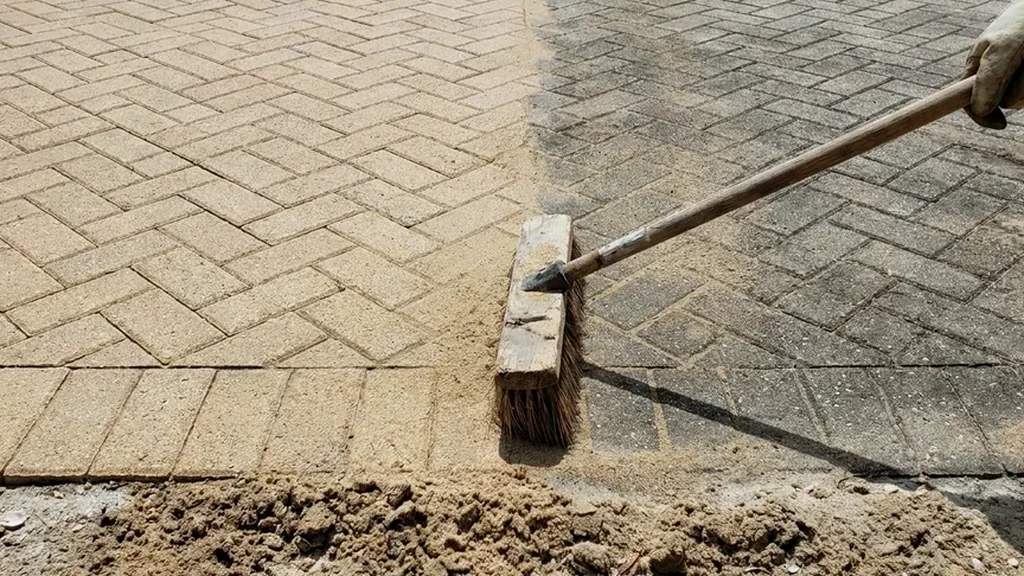
What paver problems show up most in Fort Caroline?
Sand that moves on sloped ground
Fort Caroline has some of Jacksonville's few hills and bluffs, and University of North Florida researchers describe its ground as relict dune fields that rise into high bluffs on the river's south bank. The USDA describes the nearby Mandarin soil series as sandy throughout. Jacksonville gets about 52 inches of rain a year, often in hard summer downpours. Water leaves a slope fast and can carry joint sand to the low end of a drive. Over a few seasons that leaves open joints at the bottom and full ones at the top. Weeds and settling then start where the sand left.
Shade from hammocks and oaks
The National Park Service says trails in the Timucuan Preserve pass through shady hammocks, and Queen's Harbour was planned with homes among broad oak trees. Moss and algae should not grow on pavers unless shade is heavy, so green film is a sign of how little sun a spot gets. Live oaks also drop their leaves just before new ones come out in spring, which leaves stains on damp pavers.
Big lots and long drives
Fort Caroline Club Estates has lots up to an acre, and its homes run from 1,144 to 3,501 square feet. One Jacksonville company says wide-open driveways need resealing sooner than shaded walkways, because the sun hits them all day. A long drive in full sun ages at a different pace than a shaded back walk on the same property, so one coat date does not fit every surface. A good plan notes both and tells you when to look at each.
A coat from an earlier owner
Homes here were built across many decades, from 1959 in Club Estates to 1975 through 1978 in Fort Caroline Shores. Pavers added along the way may carry any product. One Jacksonville company says old oil-based coats must be stripped first and make up about 10 to 20 percent of its projects. Water-based sealer cannot go over solvent-based, so the old coat is identified before anything goes on.
Humid air off the river
The St. Johns River at Jacksonville is an estuary, and tides and ocean storms have a strong influence on it. Air near that much water stays humid. Shaded pavers in humid air dry slowly, and slow drying is when algae and mildew settle in. Fort Caroline's parks and preserve sit along that same river, so the damp reaches nearby yards too. Mildew and algae then show first on north-facing walks and under eaves, where the sun and breeze reach least.
Do Fort Caroline's gated and open neighborhoods get sealed the same way?
Not quite, because gates and associations change who approves the work and when a contractor can come in. Queen's Harbour opened in 1988 as a 24-hour gated community with about 950 planned home sites. Hidden Hills is a gated golf community in the Fort Caroline MLS area. One Jacksonville page says a guard gate can cap the hours and vehicles a contractor may bring, so mention yours when you ask for a free estimate.
Fort Caroline Club Estates dates to 1960, with single-family homes built from 1959 on and lots up to an acre. Fort Caroline Shores was built from 1975 to 1978, with three- and four-bedroom homes of 1,475 to 2,018 square feet. More lot usually means more pavers, and the quote follows the square footage. Call (904) 479-9763 with your neighborhood name so the contractor can plan ahead.
Riverwoods, a community of roughly 255 homes near Fulton Road, has had a homeowners association since 1985 that requires Architectural Review Board approval for exterior changes. A homesite on a bluff along Fort Caroline Road has no association at all. Florida Statute 720.3035 sets the limit: an association's review of changes reaches only as far as its declaration or published guidelines. Ask your board first, then ask for a free estimate.
What does paver sealing cost in Fort Caroline?
Prices commonly published around Northeast Florida run $1.75 to $3.25 per square foot for the washing, sanding and sealing together. Across Fort Caroline's larger lots, total square footage drives the quote first, then shade growth and any old coat. A 1,200 square foot drive and a small side walk give different totals at the same rate. For your number, ask for a free estimate, and the estimate is free.
One Jacksonville cost guide says gates, stairs and tight side yards add prep time. A guard gate can also cap the hours a contractor may work, which can stretch a job over more days. Tell the contractor about any gate up front. Call (904) 479-9763 to ask how it changes your quote.
| Paved area | Typical example | Clean, sand and seal |
|---|---|---|
| 300 sq ft | Small patio or walkway | $525 to $975 |
| 600 sq ft | Two car driveway | $1,050 to $1,950 |
| 1,000 sq ft | Large driveway or pool deck | $1,750 to $3,250 |
| 1,500 sq ft | Driveway plus pool deck | $2,625 to $4,875 |
Math based on the $1.75 to $3.25 per square foot that Northeast Florida paver companies publish. Your contractor sets the actual price after seeing the surface. Repairs, leveling and stripping failed sealer are usually extra.
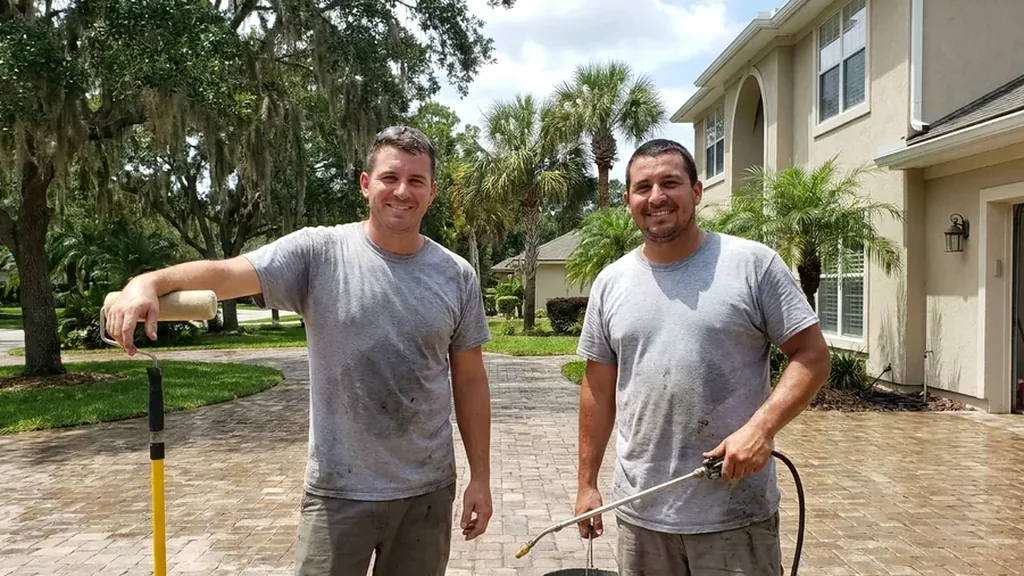
How does a paver sealing job work in Fort Caroline?
Walk the grounds and read the slope
The contractor looks at where water runs across your Fort Caroline drive, where shade holds moisture and where a section has sunk or lifted. A weak or poorly compacted base is a leading cause of sinking pavers, so those spots are marked for repair before sealing. The old coat is identified at this stage, since water-based sealer cannot go over solvent-based.
Wash at the right pressure
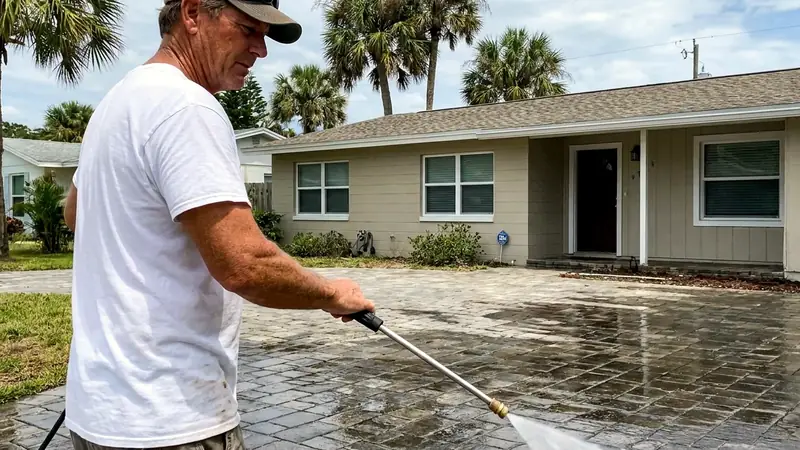
One Jacksonville company says traditional high-pressure washing can loosen joints and dislodge sand. A careful wash uses lower pressure and an angled tip. Green film, leaf stains and oil marks are treated here. Anything that will not lift is pointed out, because oil, rust and organic marks are not always fully removable.
Fill the joints with fresh sand
A wash strips the old sand from the joints, so new sand goes in first. On a slope the low end usually needs the most. Polymeric sand needs dry days to set. A sealed joint holds its sand longer, which means fewer weeds and less washout after summer storms.
Let the pavers dry
Sealing waits until the pavers are fully dry, which one Jacksonville page puts at 24 to 48 hours after cleaning. The sealer maker Surebond wants a full day of dry time after cleaning or rain. Shaded drives take longer, so a careful contractor waits instead of sealing over damp pavers.
Spray, back-roll and cure
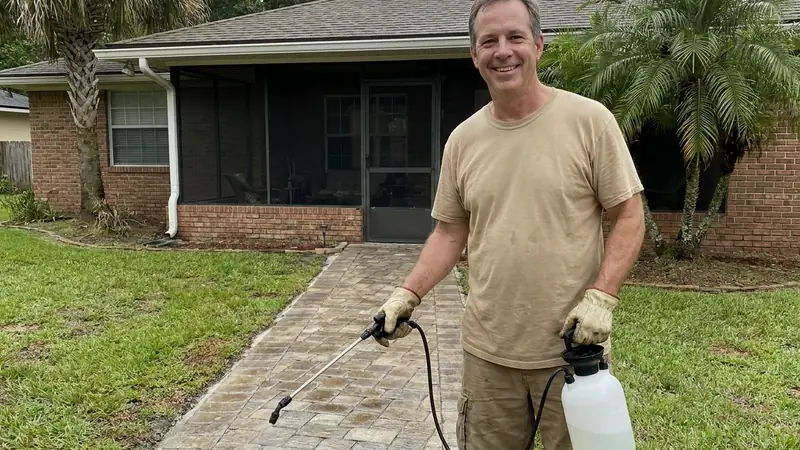
Pros spray sealer and then back-roll it, since pure rolling risks lap marks. The finish you chose goes on in thin, even passes. One local company says walking on it is usually fine within a few hours, while cars wait about a day. A fresh coat needs dry weather to cure.
Complete paver services in Fort Caroline
Most Fort Caroline jobs follow one order. The pavers are washed, the joints are re-sanded, the surface dries, and then sealer goes on. Drying matters most on shaded drives near the hammocks, where moisture lingers. To ask how many days your lot needs, call (904) 479-9763.
Wide drives on large lots take the most sun and the most tires. Pool decks and lanais need rinse water kept out of the pool. Back walks under oak branches stay damp and go green first. When you ask for a free estimate, list each surface so the contractor can plan the washing and sealing for each one.
A sealer choice has two parts, the chemistry and the look. Film-forming sealers sit on the surface and can show some gloss, while penetrating ones soak in and leave the color almost unchanged. A wet look deepens color but shows scuffs sooner than matte. Call (904) 479-9763 to compare finishes against your style and your association rules.
Polymeric joint sand needs dry days to cure, and one afternoon thunderstorm can wash it out of the joints. Most rain arrives between May and September, so summer jobs take patience. The driest stretch runs from November to April and tends to move along faster. To pick a window, ask for a free estimate.
Questions to ask before you hire
- If you miss a spot, is the touch-up visit free?
- What causes the white haze that sometimes shows up after sealing, and what do you do about it?
- The pavers under my downspout have a faded stripe. Will sealing even that out?
- If a leaf or pine needle lands on the wet coat, does it leave a mark?
- My driveway is shared with a neighbor. How do you handle the property line?
- Can you tell whether my pavers are concrete, brick or travertine before you quote?
- What would make you suggest a low-sheen finish for my patio?
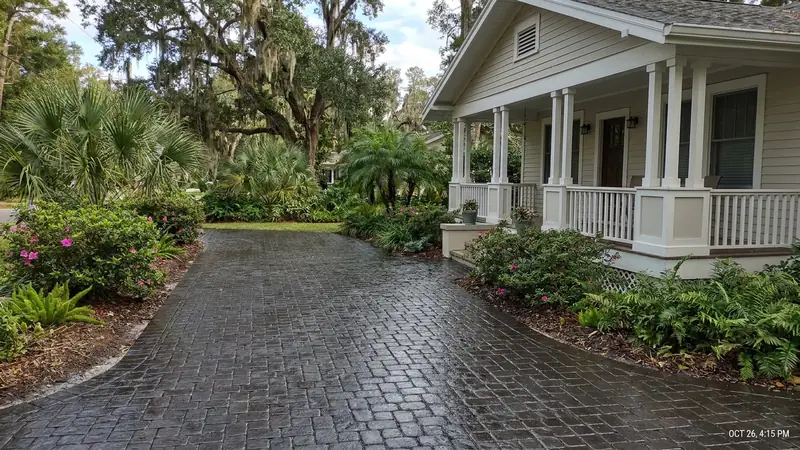
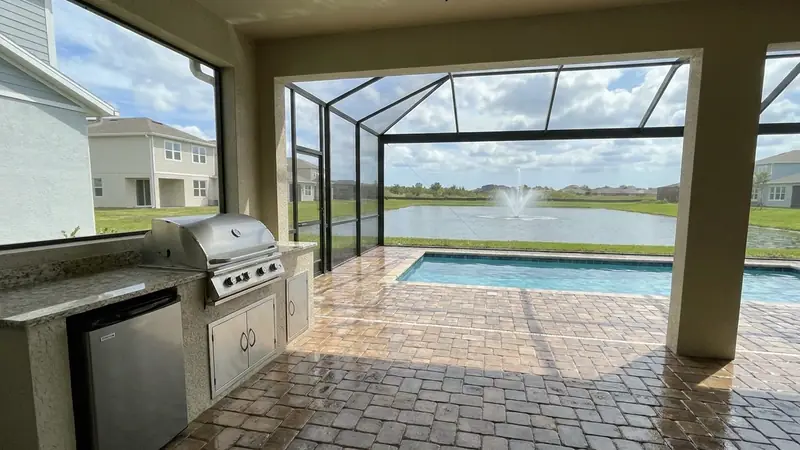
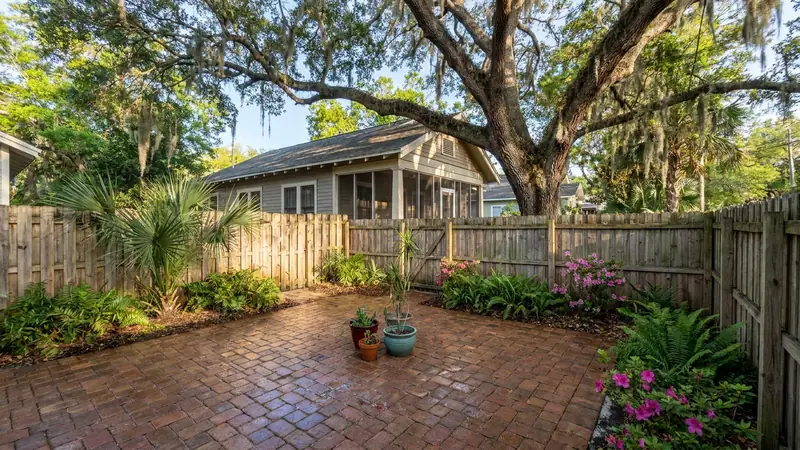
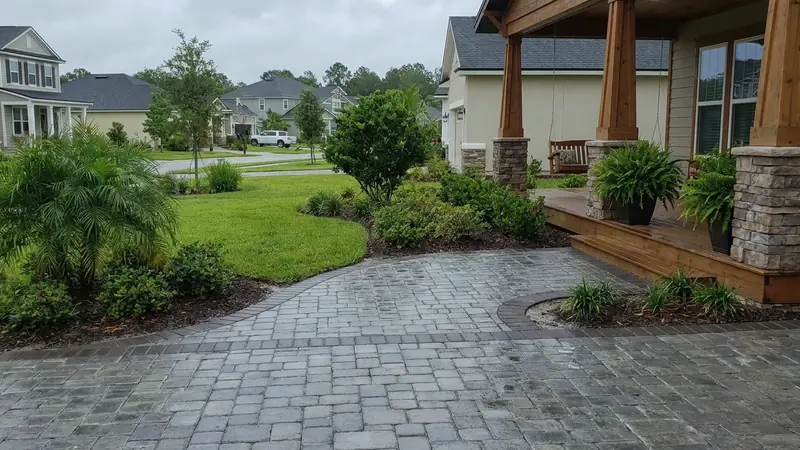
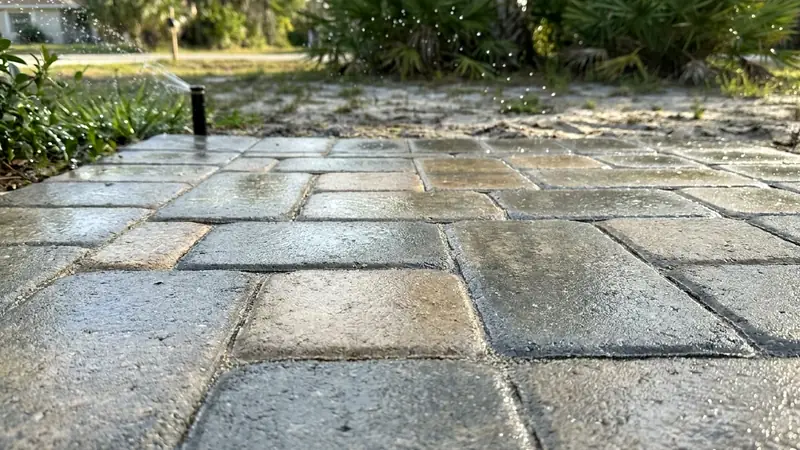
What do sealed pavers look like around Fort Caroline?
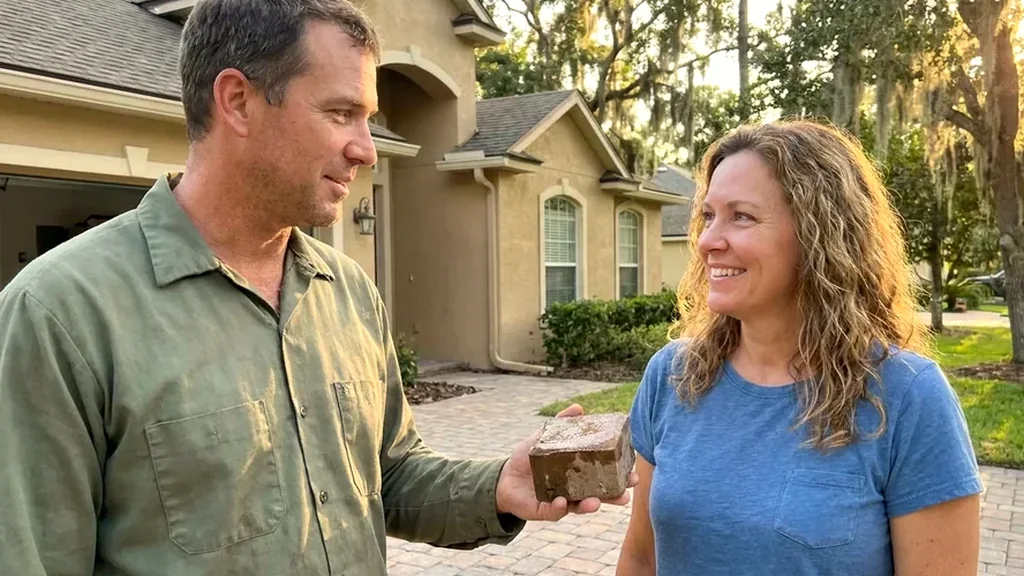
Why local matters in Fort Caroline
A contractor who works this side of the river will ask which gate or association you live behind. Queen's Harbour is a 24-hour gated community, and Riverwoods has an Architectural Review Board, so the right first question is which one applies to you. That question can save a second trip. To talk with a contractor familiar with these streets, call (904) 479-9763.
Slope matters as well. Fort Caroline has some of Jacksonville's few hills and bluffs, and water leaves a hilly drive faster than a flat one. A local contractor checks where the runoff goes and where the joint sand ends up. You can ask for a free estimate and ask how a sloped drive is handled.
Distance is part of it. ZIP 32225 covers about 26 square miles of land and 8 of water, so an address near the Intracoastal sits a long way from one by the memorial. A contractor based nearby can often name a day that fits your street. Call (904) 479-9763 to ask.
What is Fort Caroline named for, and what landmarks mark the area?
Fort Caroline is named for a French settlement founded on 22 June 1564 on a small plain below the bluff later called St. Johns Bluff. Spanish forces took the fort on 20 September 1565. The National Park Service created Fort Caroline National Memorial on 16 January 1953, though the fort's exact site is unknown. If you live near the memorial, ask for a free estimate and mention it.
The memorial is at 12713 Fort Caroline Road and holds the visitor center for the Timucuan Ecological and Historic Preserve, which was established in 1988. The 600-acre Theodore Roosevelt Area has trails, and the Ribault Column replicates a monument Jean Ribault left in 1562. Ed Austin Regional Park, a 144-acre site on McCormick Road, is close by too. If your home is near any of these places, call (904) 479-9763 and share your street.
University of North Florida researchers place the Mill Cove Complex, a Native American village and ceremonial site about 1,000 years old, in residential yards in the Fort Caroline area. It lies across the same dune fields that form the bluffs on the river's south bank. Shields Mound sits near Fort Caroline Road and Hartsfield, and Grant Mound is off Fort Caroline Road on the river. Those old sandy ridges are part of why this ground drains the way it does, so ask for a free estimate and mention how your lot slopes.
Frequently Asked Questions
What do homeowners pay to have Fort Caroline pavers sealed?
Most Fort Caroline jobs fall between $1.75 and $3.25 per square foot, the clean, sand and seal range that Northeast Florida companies publish. Large Fort Caroline drives are priced by total area, so ask for the square footage in the quote. Old coats and heavy shade can push a job toward the upper end.
How long do paver sealers last near Fort Caroline?
Sealer commonly lasts two to five years, by the span companies quote. One Jacksonville company says wide-open driveways need resealing sooner than shaded walkways. A coat on a sunny Fort Caroline drive may wear faster than one on a walk under the oaks.
What are the downsides of sealing pavers?
Upkeep and timing are the main ones. Sealer wears and needs a fresh coat later, a wet look shows scuffs sooner than matte, and the job needs dry pavers and dry weather. Sealer also cannot hide a sunken section, so repairs come first.
Does sealing pavers pay off in Florida?
Yes, because sun, rain and humidity all wear on bare pavers. One Jacksonville company compares sealer to sunscreen for pavers. A sealed surface holds its joint sand and rinses clean more easily, since dirt and algae find less to grip.
Is it better to spray or roll paver sealer in Fort Caroline?
Spraying and then back-rolling is the common method. One Jacksonville company says pure rolling risks lap marks, while the back-roll works the sealer into the joints. Ask which product and method the contractor plans to use on your pavers, and keep the product name for your records.
Why do paver sealing quotes run so high?
Most of the cost is prep. Prep takes about 2 to 3 hours for every hour of sealing, one Jacksonville company reports. Washing, re-sanding and the wait for a dry surface take hours, and gates or tight side yards add more.
Does my Fort Caroline gate or HOA change when sealing can happen?
It can. A guard gate may cap the hours and vehicles a contractor may bring, and an association may need to approve the finish. A natural-look sealer may count as maintenance, while a high-gloss one is more likely to need a sign-off. Check your rules first.
Will a sloped Fort Caroline driveway keep its joint sand after sealing?
It should hold sand better than an unsealed one, since sealing locks joint sand in place. Hard rain on a steep drive can still move loose sand before the coat cures. That is why the joints are filled right before sealing and the surface is kept dry for a day or more.
Can sealing wait until after the rainy season in Fort Caroline?
Yes, and many owners plan that way. Rain falls mostly from May to September, and the driest stretch runs from November to April. Waiting for the dry months lowers the odds of a storm washing out fresh joint sand, though a bare surface keeps aging in the meantime.
How soon can I use my driveway after sealing?
Most pavers can be walked on within hours, and cars wait roughly a day. One Jacksonville company says its sealant needs about 24 hours to dry. Shade and humidity can stretch that, so ask the contractor for a time that fits your product.
Nearby areas we serve
Ready for a Free Estimate in Fort Caroline?
Call (904) 479-9763 and tell us about your pavers.
Free, no obligation